What is paint correction?
Paint correction is the staged machine polishing of your car's clear coat. Using a dual-action machine, graded compounds and foam or microfibre pads, we level the clear coat by a few microns until the defects sitting in it (swirl marks, fine scratches, oxidation, water etching, buffer holograms) are gone. Because the damaged layer is removed rather than disguised, the result is permanent: no fillers, glazes or wax doing the flattering, which is what a quick cut and polish usually relies on.
It's also a different job from cleaning. A full car detail washes, decontaminates and protects the surface; correction repairs it. Before a machine ever touches your paint we decontaminate it (iron fallout remover and clay), take paint-depth readings, and polish a test section, so the least aggressive combination that fixes your paint is the one used across the whole car.
What are swirl marks, and how did they get there?
Swirl marks are thousands of fine, circular scratches in the clear coat. In the shade the car can look fine; under direct Queensland sun, or servo lights at night, they flare up as spider-webbing around every reflection. Dark paint shows them worst.
Almost all of them come from washing. Automatic brush car washes are the biggest single culprit, because those brushes carry the grit of every car that went through before yours. After that it's home technique: single-bucket washes that rub the dirt you just removed back over the panel, dirty sponges and old chamois, dry-wiping dust off the duco, and drying with whatever towel is handy. Gold Coast cars cop an extra load: salt air from Currumbin to Southport forces more frequent washing, the M1 commute adds brake-dust fallout that bonds to paint, and our UV makes every defect glare. A stronger product at home won't fix it. The fix is removing the damage once, properly, then changing how the car gets washed.
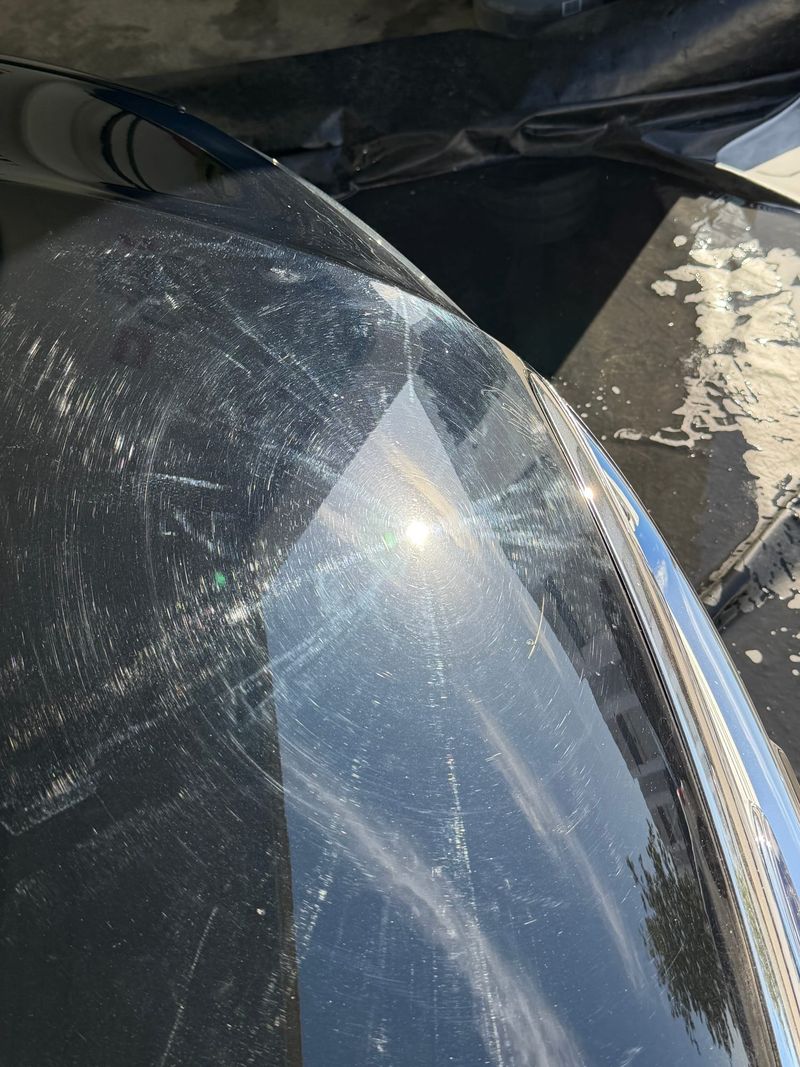
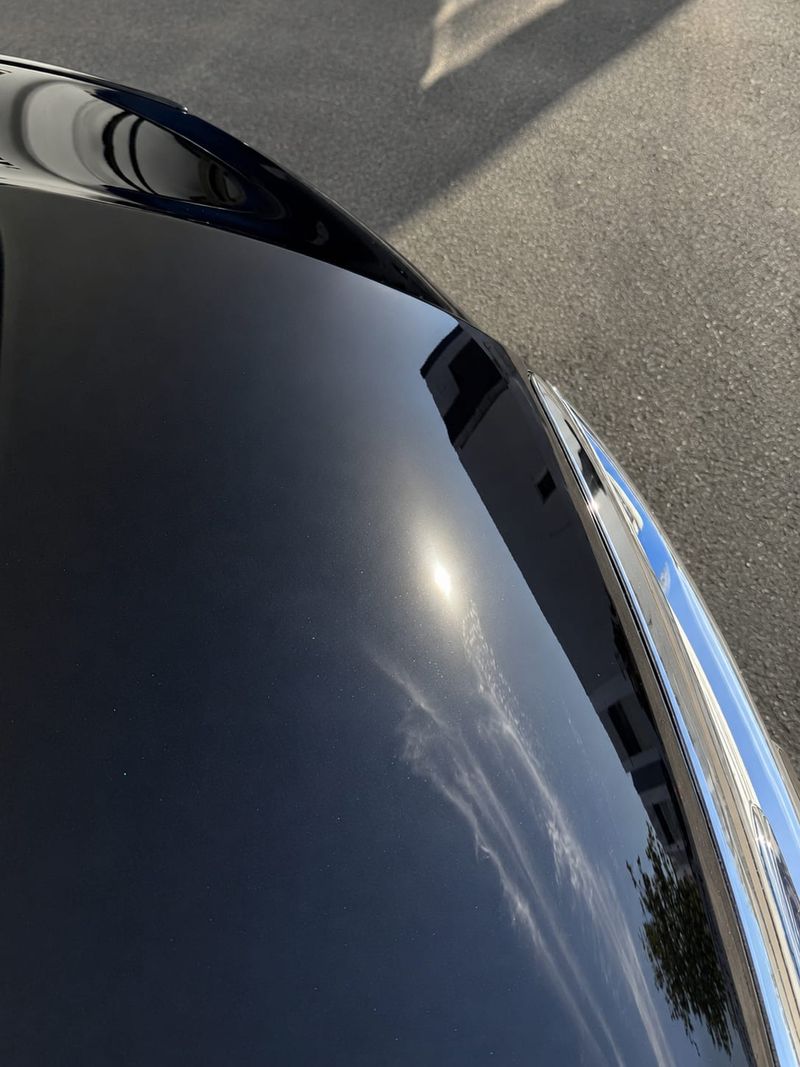
Single-stage vs multi-stage correction: what do I need?
A "stage" is one complete pass over the whole car with a particular pad-and-compound combination. More stages remove deeper defects, but they take more hours and cost more, so the right answer depends on your paint's condition and what you want from it. That's what our inspection settles. As a rule of thumb: if the goal is getting the gloss back on a daily driver or a car being sold, single-stage enhancement does it, and it's light enough to be done mobile in your driveway. If you want defects removed outright (dark paint, an enthusiast car, or anything about to be ceramic coated), two or more stages at the Burleigh Waters workshop is the honest recommendation. Every level ends the same way: polishing oils wiped down and the finish checked under lighting that hides nothing. The table below is the shorthand we use when quoting.
Swipe sideways to see the full table.
| Correction level | What's involved | What it removes | Best for |
|---|---|---|---|
| Single-stage enhancement | One full machine pass with a finishing polish, after wash and decontamination. | Light swirl marks, faint water spots, mild oxidation and general dullness. Restores most of the gloss. | Daily drivers, pre-sale prep, gloss revival. Light enough to do mobile at your place. |
| Two-stage correction | A cutting-compound pass to remove defects, then a refining polish pass to restore clarity. | The large majority of swirls, light scratches, water etching and buffer holograms. | Dark paint, enthusiast cars, and the standard prep before ceramic coating. Workshop preferred. |
| Multi-stage correction (3+) | Heavy cut plus multiple refining passes; isolated wet-sanding where it's safe to do so. | Deeper random scratches and heavier defects, chasing a near-flawless, show-level finish. | Show cars and neglected paint being brought back properly. Burleigh Waters workshop only. |
Is paint correction mobile, or done at your workshop?
Both, and the split is deliberate. Single-stage enhancement polishing travels well: we bring the machines, power and lighting to your driveway anywhere on the Gold Coast: Burleigh Heads, Palm Beach, Miami, Mermaid Waters, Varsity Lakes, Robina, Elanora, Currumbin, Southport, Nerang and everywhere between. All we need is somewhere shaded to work.
Multi-stage correction happens at the Burleigh Waters workshop (Unit 41/314 Burleigh Connection Road). Finishing paint to a defect-free standard needs controlled lighting to inspect every panel from every angle, a dust-controlled space if the car is being ceramic coated afterwards, and the freedom to give a job the hours it needs instead of racing the afternoon storm or the sea breeze. Drop-off is Monday to Saturday, 8am-6pm; we'll confirm the timeframe when we quote. Not sure which your car needs? Text photos to 0418 111 421 and we'll tell you straight.
How much does paint correction cost on the Gold Coast?
It's quoted per vehicle, after we've seen the paint. A flat advertised price for correction usually buys a fixed number of hours, not a finished result. We'd rather quote the actual job. Four things move the number: vehicle size (a LandCruiser carries far more paint than a Yaris), clear-coat hardness (European paint generally polishes slower than Japanese), how severe the defects are, and how many stages the finish you're after requires. A mobile single-stage enhancement sits at the affordable end; a multi-day, multi-stage correction on neglected paint is a different job and priced like one.
Getting your number is free and fast: text photos taken in direct sunlight to 0418 111 421, request a quote through the form below, or call into the workshop for a five-minute inspection and a firm price on the spot. Booking correction with ceramic coating? We'll quote the pair as one package, or contact us with any question first.
Can scratches be fully removed?
Only when the scratch sits within the clear coat. We'll tell you which kind you have before any work starts. The quick test: run a fingernail across it. If the nail glides over, the mark is almost certainly clear-coat-deep; correction can usually remove it completely, or reduce it to the point you stop finding it. If the nail catches, the scratch has likely gone through to the colour or primer underneath, and no polishing can make paint that isn't there reappear. Chasing a deep scratch with a machine only thins healthy clear coat and creates a bigger problem later.
For deep marks you'll get honest options: correct everything around it so the panel presents cleanly, or have it touched up before we polish. Because we measure paint depth before and during the job, you'll know what's achievable before we start, not after we've "buffed it as far as we could".
Should paint correction be done before ceramic coating?
Yes. Correction always comes before coating. A ceramic coating locks in exactly what the paint looks like on the day it's applied. Coat over swirl marks and you've sealed them under a hard, high-gloss layer that showcases them for years; the only way to fix them afterwards is to machine the coating itself off and start again, paying for the job twice.
The sequence we run at the Burleigh Waters workshop: wash and full decontamination, correction to the agreed level, a panel wipe to strip every trace of polishing oil, then the coating goes onto clean, corrected paint. It's why our ceramic coating packages (from $999) are built around paint condition, and why the deep, wet gloss people credit to ceramic is mostly the correction underneath it. Planning both? Say so in the quote form and we'll price correction and coating as a single package.